 |
 |
 |
 |
45 min duration |
Course authored by Skills for Health |
Full multi-media course with image, video & interactive elements |
PDF certificate on completion |
Course overview
Build confidence to recognise racism in health and care, challenge assumptions, support people affected and record and report concerns.
Why do I need this course?
- Racism affects staff wellbeing, confidence and opportunities, as well as access, trust, safety and quality of care.
- Everyday comments, assumptions and routine decisions can cause harm or reinforce wider patterns.
- You can take practical action without having to prove intent or investigate the concern yourself.
What will I learn?
- Explain what anti-racism means and how it differs from simply avoiding racist behaviour.
- Recognise anti-Black racism, antisemitism, Islamophobia and anti-Muslin hostility, and other forms of racism.
- Identify interpersonal, institutional and structural racism and their effects in health and care.
- Explore how to support people affected and raise concerns appropriately.
Who is this course for?
- People working in health and care in clinical, care, administrative, support, management and leadership roles.
- Staff who may experience, witness or receive a concern about racist behaviour involving colleagues, patients, service users, visitors or relatives.
Course details
Racism has a serious and lasting impact on staff wellbeing, confidence and opportunities. It also affects patients’ access to services, trust in healthcare and the safety and quality of their care.
This course was developed in response to the Lord Mann Review of antisemitism and other forms of racism in the NHS and healthcare regulatory system. It supports the review’s recommendations by exploring antisemitism, anti-Muslim hostility and other forms of racism in health and care. The course was created with input from people with lived experience, helping to ensure the content reflects the realities faced by staff, patients and communities.
By the end, you'll have a clearer understanding of your responsibilities and greater confidence to put equality, inclusion and human rights into practice.
Upon completion of this course, learners will be able to:
- Explain what anti-racism means and recognise assumptions linked to race, ethnicity, religion, nationality, language, accent, name, dress or perceived background.
- Recognise anti-Black racism, antisemitism, Islamophobia and anti-Muslim hostility, and other forms of racism and religious prejudice.
- Distinguish interpersonal, institutional and structural racism and explain their effects on staff and people using services.
- Apply the Four Rs - Recognise, Respond, Record and Report - when racism is experienced, witnessed or shared.
- Listen and offer support without minimising, pressuring or taking over; keep factual records and use proportionate reporting routes.
- Challenge racist remarks when safe, seek support where direct action is not appropriate, and recognise possible victimisation or retaliation.
Module 1: Racism and its Impact ~25 minutes
Module 2: Recognising and Responding to Racist Behaviour ~20 minutes
Assessment: 10 multiple-choice questions (from randomised question bank)
Certificate preview
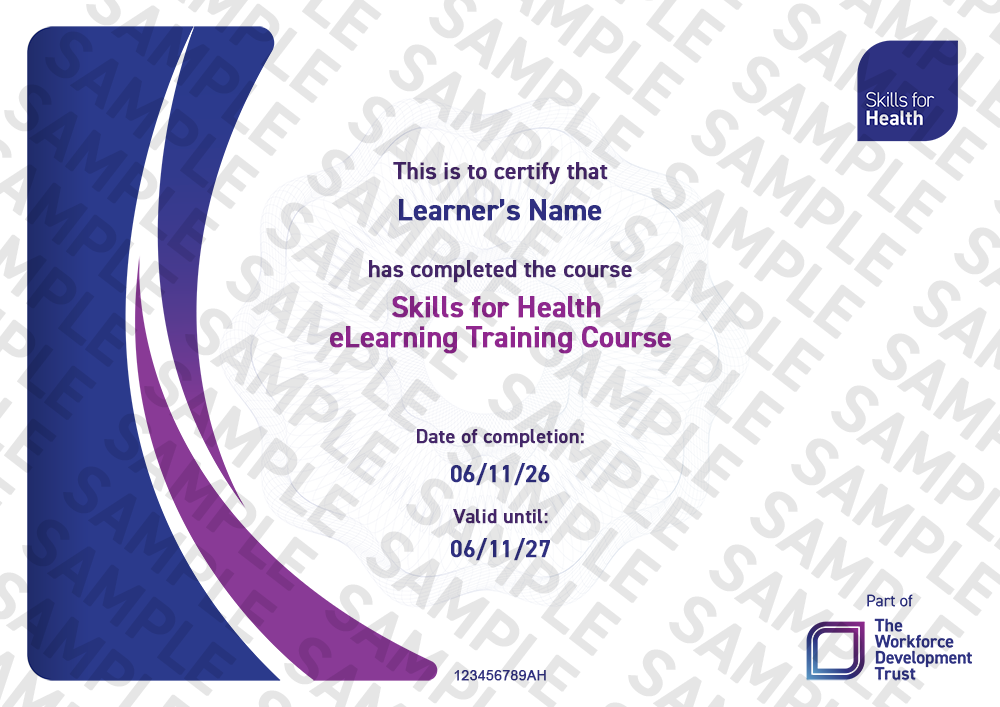
Completion of this eLearning module grants you one of our recently redesigned Skills for Health eLearning certificates - fully personalised with your name, course and the date of completion. Certificates are instantly available on your user dashboard.
- Course Access Duration: 1 Year
- Course Length: 45 mins
- Recommended Refresh Frequency: 3 Years